
Starting a "Prayer Revolution"
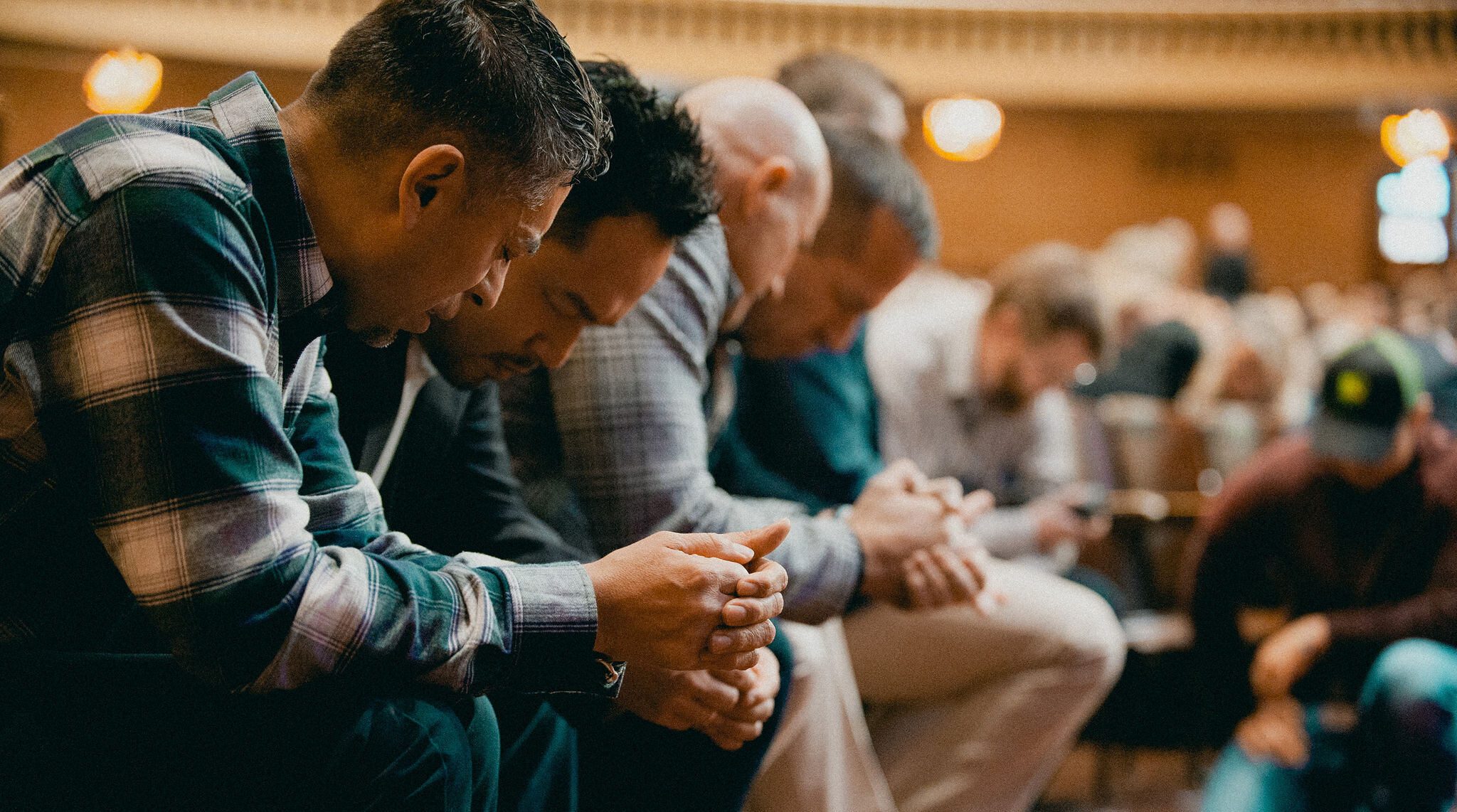
The following is an interview between City to City’s Director of Content, Brandon J. O'Brien, and John Smed, founder of Prayer Current and author of the book Prayer Revolution.
Strategy vs. Prayer
Brandon J. O’Brien:
In some ministry circles, there’s a general consensus that the way we're doing ministry isn’t working. As more and more churches close in North America each year, there's a lot of talk about developing new models and strategies to reverse the trend and cause a net growth of churches.
At City to City, our mission is to help leaders start and strengthen churches to proclaim the gospel together in their cities. I think you want to see the same kind of world that many of us are dreaming and praying about, where cities are renewed, people are changed, and we see an increase in churches.
But in your book Prayer Revolution, you’ve said that we can’t realize this future purely by strategizing.
John Smed:
Part of the challenge the church faces today is that a lot of our discourse about mission stays within the community of faith. Our engagement with culture can be on a highly-articulated but theoretical level. There's a tendency to think because we articulate something we've actually done something.
Recently, I went to a large evangelical mission movement where there was a lot of analysis on the problem of reaching Canada, how our backs are against the wall, and how we aren't devising new strategies of evangelism. The entire conference was spent lamenting it. I think we've stalled at pointing out that the problem of engagement is important. The question now is, “What should we do about it?”
“The primary and first way to engage a culture is to pray.”
There's nothing simpler and more obvious than the biblical answer, which is to begin by engaging culture in prayer. The church has to learn to intercede on behalf of its culture. Remember God's words to Solomon: “if my people who are called by my name humble themselves, and pray and seek my face and turn from their wicked ways, then I will hear from heaven and will forgive their sin and heal their land” (2 Chronicles 7:14).
It's clear we begin by confessing our own sin, our complicity in the problems that exist in the world around us. And we intercede on behalf of the world. Abraham interceded for Sodom. Jeremiah encouraged those in exile to pray for the city to prosper. Daniel prayed three times a day in his public office while he was in Babylon. The primary and first way to engage a culture is to pray. Prayer is not a theoretical thing that we do until we can get practical. We have to see that the actual prayer is actual engagement with the culture.
What is Prayer Revolution all about?
BJO:
The general mission and vision of Prayer Current is to help churches bring prayer to the center of their ministry, which is done through discipleship and leads to evangelism and city renewal. How might Prayer Revolution help someone make a step in that direction?
JS:
If you read Prayer Revolution, you'll see we've provided a lot of testimonies from our own experiences and the history of mission in the world. We're even explaining the rationale, the apologetic, for what we do from many different points of scripture. You can find material like this in different places, but we wanted to compile these into a single, formidable, incontestable argument on the primacy of prayer in advancing the kingdom of God. We decided to take what I believe are some of scripture’s chief arguments of how prayer initiates revival, personal change, and urban renewal and put them under a single cover.
At the same time, we've included a lot of personal testimonies, testimonies from history, biblical narratives, and practical tools on how to experience the power of prayer. I like to think that if someone read Prayer Revolution, they would get not only a great introduction to what we're trying to do, but a real taste of it.
BJO:
Part of the book focuses on the concept of “kingdom prayer.” Can you tell us what that means?
JS:
Let's take the Lord's Prayer as an example of kingdom prayer. If there was ever a kingdom prayer, the Lord's Prayer has to be it. He's the King. If you want to understand anything about the kingdom, trace it back to the King. The Lord's Prayer is his pattern for how the kingdom should function now. It gives us tracks to run on and helps us not only navigate life, but advance the kingdom.
“The Lord's Prayer automatically turns us from an inward life to an outward life.”
As you read the Lord's Prayer, the first thing you learn is that it's a big prayer. “Thy kingdom come,” “thy will be done on earth,” “deliver us from temptation.” We're praying for universal concerns. We're praying for the kind of massive changes that only Christ can bring to pass. What happens with kingdom prayer is we move away from the confining realm of self-centered prayer, which is only praying for me, my problems, my family, my health. Our heart expands in capacity for God and for the world around us by praying the petitions in the Lord’s Prayer.
Kingdom prayer takes us out of ourselves and puts us into the universal realm of God's purpose. At the same time, self is included, of course. It's just that we don't start with self and we don't end with self. We allow the values and purposes of the kingdom to invigorate our life through prayer.

BJO:
What happens when we make a shift from only praying those sorts of personal prayers to really catching a vision of praying first for Christ and his kingdom and then finding our place in that prayer?
JS:
One time I was talking to a young Muslim at his shop in New York City. I asked him about prayer and said, “Do you ever pray about your problems in life?”
He said, “Oh, I pray all the time. I pray so I might be able to live with these problems.”
I told him, “Something interesting happens to me when I pray. A whole new world opens to me and I become conscious that God is my father and I'm a child of God. It lifts me above my present problems and lets me see something far larger and greater.” So I use this as a way of speaking to people about what prayer does for me. If you pray about a constricted world, a worry-filled world, a problem-centered world, always about the issues of life that day, it paradoxically drives you further into yourself and into your problems.
“[A DAY OF PRAYER] not only transforms me personally, but brings the community closer together and takes away what we all feel right now: the tremendous frustration at being unable to affect the world around us.”
But that’s not the case if you pray outside of yourself—for others, for example. The Lord's Prayer is entirely an intercessory prayer. The pronouns are plural; it's a prayer you pray with others and a prayer you pray for others, automatically getting you out of yourself. What are you praying for? You're praying for other people's well-being. When you pray, “Give us this day our daily bread,” you're praying for your neighbor to have what they need to live on. You're praying for those who might be under some oppression. You're praying that God's good will would be done on earth and people would be delivered from their trials. The Lord's Prayer automatically turns us from an inward life to an outward life.
I find that it helps not only when I pray by myself, but particularly when we pray together. For 20 years, we've used the Lord's Prayer as a model for a day of prayer at Grace Vancouver Church and Prayer Current. We say, “Let's find out what it would look like if God answered these petitions in the world we live in.” It's amazing how fast that day goes and how expansive the prayer becomes and how a community forms around that prayer. It not only transforms me personally, but brings the community closer together and takes away what we all feel right now: the tremendous frustration at being unable to affect the world around us. We feel like we can't get started. When I talk to young people there, they admit that they're buried in technology and media, but they said, “Where do I go? How can I get out of it?” I talk to them about prayer.
The wonderful thing is, prayer is not talking about doing something. Prayer is doing something. We don't pray so that we can have a revival. Prayer is revival. Revival is when a bunch of prayers happen. So the solution to the frustration we all feel about not being able to change our community, our world, and our family is praying together.
How Can Prayer Revolution Help Leaders and Laypeople?
BJO:
You and I both work with denominational leaders, training organizations, and pastors trying to network in cities. How might somebody who's in one of those positions use Prayer Revolution to convene with others in prayer?
JS:
Some people have used it by forming a study group, going through one chapter a week or month, and interacting with the questions together. For example, we recommend that everyone in a group reads it and brings a little insight they got from a certain part so everyone gets to participate. And intersperse the discussion with prayer. Once you've given the chapter overview, pray together. Once you've each had a chance to share your insight from the chapter, pray together. Then take questions at the end, discuss them, and pray into your world, into your church. I think it's a good way to mobilize.
We have several groups that have been doing this. There's a group of lawyers in Winnipeg that have been doing this on a monthly basis. And they told me, “Instead of just meeting to pray about our problems and what's going on in our lives, we pray for the judiciary of Canada.” It's refocused their prayer in a healthy direction.
Some churches have contacted us at Prayer Current about training because they've taken the trouble to go through the book with their leaders. That helped them come to the recognition that there's something more to be done in the prayer life of their church. And that turned into a resolve to find out what they can do. At that point, I think the book provides a lot of help, but Prayer Current has other resources that can help them too.
“The wonderful thing is, prayer is not talking about doing something. Prayer is doing something. We don't pray so that we can have a revival. Prayer is revival. Revival is when a bunch of prayers happen. So the solution to the frustration we all feel about not being able to change our community, our world, and our family is praying together.”
BJO:
We've primarily been talking about the value of this resource and a broader vision of prayer for ministry practitioners. But if somebody isn’t a ministry practitioner, a pastor, or leader, what role do you think Prayer Revolution can play for them?
JS:
Today, prayer is focused on as an individual activity. And while we're encouraging corporate prayer among people, that doesn't lessen the importance of individual prayer. I don't think there's anything in the book that would cause someone to say, “Oh, that doesn't apply to me because I'm not a leader.” We've written it to encourage prayer leadership, to be sure, and to encourage that larger vision, but it isn’t written to leaders specifically. We've written it to the general Christian population. In fact, I would say I studiously avoided it becoming something that’s accessible only to academia or the clergy.
I believe that the greatest untapped resource of the Christian church today is the lay leader who isn’t being effectively mobilized in mission and ministry. I think mobilizing a church in prayer is a wonderful way to raise up a new generation of leadership that's really doing something. There's nothing more important in the world than to mobilize people for prayer.
About the Author
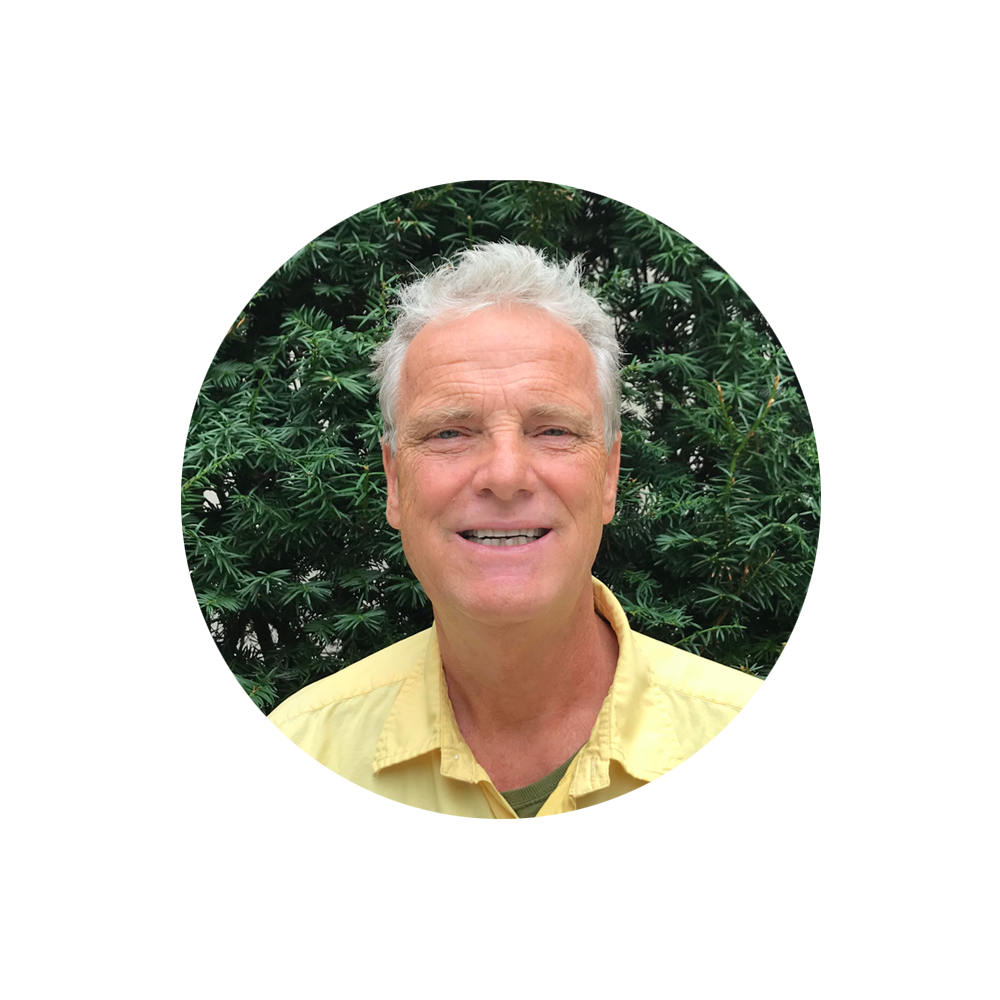
John Smed is the Founding Director of Prayer Current, an organization that helps leaders multiply disciples through prayer and evangelism. Since 2000, John and his team have developed prayer training materials, conferences, and coaching for church leaders and networks worldwide.
With his wife Caron, John has planted two thriving urban churches in Canada, directed church planting for Mission to North America for seven years, and helped start Grace Network Canada.