
How Celebration, Community, and Empathy Show the Gospel

The following is an excerpt from an interview with pastor René Breuel on City to City’s How to Reach the West Again podcast. In the discussion, Breuel paints an encouraging picture of the relational pathway to the church for non-Christians. Read on for what he means by saying, “unofficial ministry counts more than official ministry” in his context of Rome, Italy.
BRANDON J. O’BRIEN: Help us understand your ministry context. Rome has been an important part of the West historically. It is experiencing the rise of secularism like other cities, but it's also a thoroughly Roman Catholic context. I'm curious to know how those dynamics work together and how the Roman Catholic heritage of your city impacts the work of evangelism and apologetics.
RENÉ BREUEL: In Rome, I think the main question people have about Christianity doesn't really center around God. For example, it is not the question of “Is there a God?” or “How can there be a good God if there is suffering?” or “Is the Bible trustworthy, or is it oppressive and exclusive?” It centers around the church.
People feel that the church is flawed and outdated, but it's the only church we know. We don't accept it, but it's ours. So there is ambivalence towards the church. They don't even ask, “How could there be something different?” They don't know of any other options outside of Catholicism.
BJO: Is it primarily the church's history or the church's continued presence in the city that creates apologetic challenges?
RB: I feel that the history of the church is part of it, though it's mostly that Italians have—for a couple of generations now—detached from the church. They see it almost like a public utility, but they don't see much relevance in it for them right now. And they see an outdated model when it comes to sexuality and how it plays out in the scandals of priests who abuse people or have double lives. They don't see how it really speaks in their language, into their own problems nowadays. But it's the only option they know.
If you approach them from a non-Catholic perspective, they don't have a category for you. “Are you a sect? Can there be other legitimate churches that are not Catholic?” The next question, then, is, “What's the difference between your faith and Catholicism?” You may start to explain the external parts such as the ability for pastors to be married, seeing people baptized as adults, and so on, but they remain reticent over time. If you forge a relationship and build trust, then they become increasingly more open to hearing you out.
BJO: One feature of broader European culture that I find interesting is that Catholicism can be a significant part of a person's identity even if it's not a religious identity. There's something in that heritage that is cultural rather than purely spiritual or religious. Do you find that to be true in Italy, even of the younger generations that have left the church?
RB: I think people, even the younger generations, do draw part of their identity from Catholicism. However, to a smaller degree, one notion I find helpful is from a sociologist in the U.K. named Grace Davie. She talks about vicarious religion in which the state church takes part in the people's identity—in our case, the identity of being Italian or Southern European. It creates a communal sense of identity.
A lot of this communal identity comes from your family, from your hometown, and from the church. Even if you're not actively participating in it, you are still a part of it, in a sense. It is just as much a part of them as being Italian, so it's difficult to conceive of a different identity available to them. I’ve found that often people's families react in a similar way to those from a Muslim background; they feel like leaving Catholicism is an abandonment of heritage and a betrayal of the family. It's not usually to the same extent, but for a few people, it does near that level of intensity.
[Catholicism] is just as much a part of them as being Italian, so It's difficult to conceive of a different identity available to them.

I would say that here in Italy, there is a combination of Western individualism and a collective approach to life that emphasizes relationships, being part of a group, being part of the family, and staying loyal to your hometown and home region. So our approach in presenting the gospel to people tries to offer a sense of belonging as much as believing. We try to not only present a set of doctrines for people to believe in; it's very important for them to see a community of people who believe. They need to see how people relate to one another, how they love each other, and how they deal with differences. That is the picture they need to see for them to acquire a new sense of identity: Christianity embodied in a community they get to be part of.
BJO: I wonder if people's need to belong to a community factors into people's criticism of the church—in that it's not just some institution out there with a bad history, but that somehow those sins and wrongs are a part of the community, too. Do you sense that people feel responsible for the wrongs within the church at some level, or that they're trying to distance themselves because of that?
RB: That's quite an interesting observation. I think so. There is a sense of Catholicism being part of the fabric of our identity, even if you have nothing to do with actually going to church. It's something we have to try to improve or move past, but often people don't know how to do so. They may still have a countervision to the secularizing narratives of Western society outside the church, but they feel stuck in their situation.
BJO: How do you step into community and conversation with people who find church both irrelevant and historically unjust?
RB: When it comes to Rome, I think dealing with people’s ambivalence towards religion largely doesn't happen in a spoken way; it’s more about embodying a different way of being. Say, for example, someone sees younger people in the church. Or they see a group of people who have a different sense of love and joy about them.
When it comes to rome, I think dealing with people’s ambivalence towards religion largely doesn't happen in a spoken way; it’s more about embodying a different way of being.
This is a beautiful thing because it makes people curious—they're puzzled. They don't have categories for what they're encountering. At the same time, we see the beauty of the church as people worship and accept others and love them. It almost goes beyond the cognitive process of explaining or giving categories to things right away, but the community that people need to see is captivating.
BJO: For those who enter your community and experience this sort of liveliness and welcoming of the church community, do they recognize some of it from their previous experience with the Catholic church or is it a brand-new set of ideas and conceptions for them?
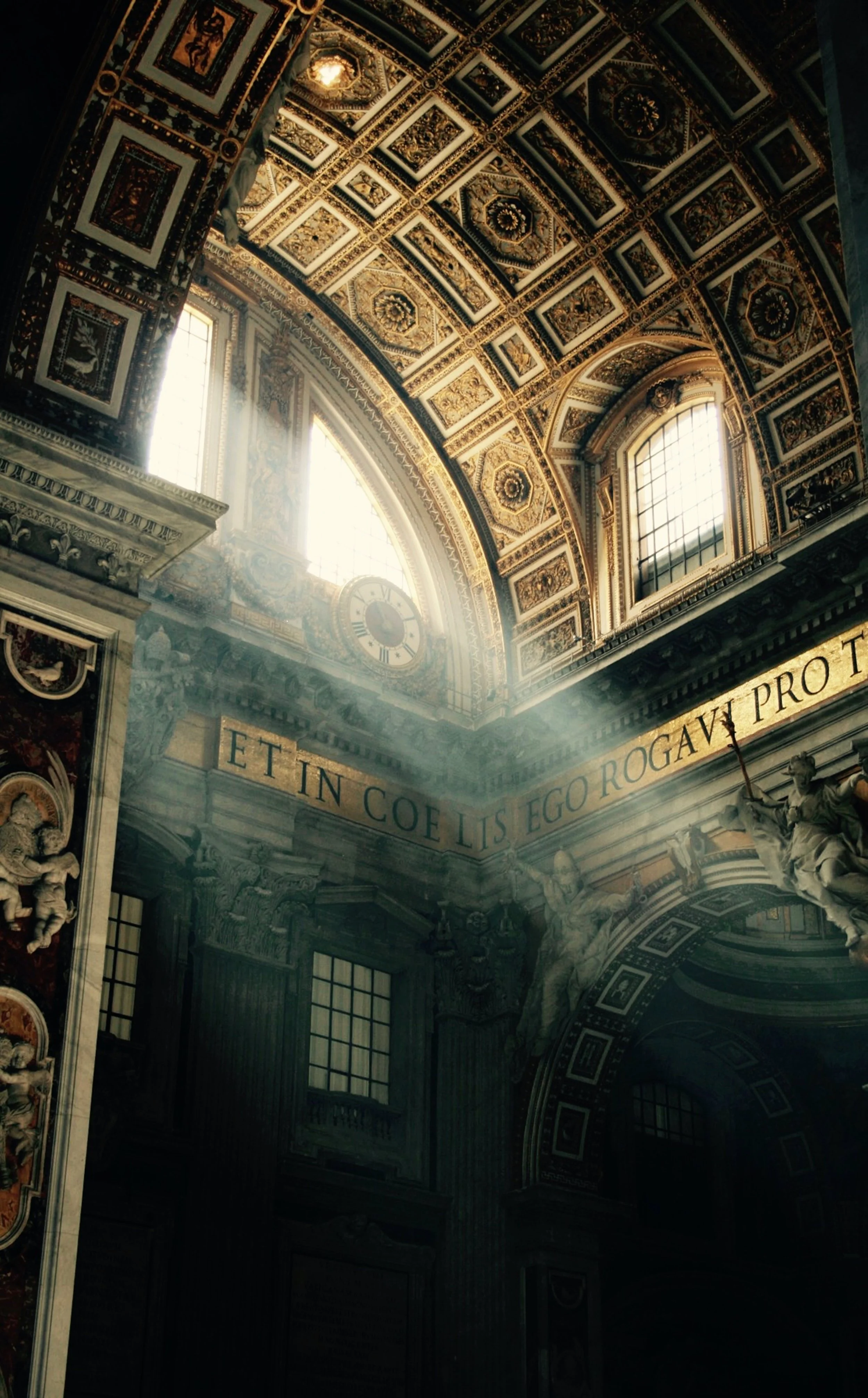
RB: When people come into contact with an evangelical church such as ours, it's a mix of encountering something very new and encountering something very old. It often brings to mind memories of one’s childhood, maybe a prayer or a grandmother who told you about faith. So it's a recovering of the past, in a sense, while at the same time coming into contact with something which looks very new and adult and fresh for them.
In these instances, people often start to rethink their lives; they rebuild their stories by assigning new value to points of contact in the past. In a sense, they don’t assimilate to a whole new set of doctrines, but they believe in doctrine that the culture accepts in general: Jesus is the son of God, the Bible is the Word of God, the Trinity is made of Father, Son, and Holy Spirit, et cetera. So it's a curious mix of old and new coming together.
BJO: To what degree do you see people consciously recognizing the limitations of the frameworks that they’ve inherited either from a nominal association with the church, broader cultural expectations, or secularizing efforts to rewrite their story? What kinds of crises or conflicts do you see people reaching that might prompt them to look for a community like yours?
RB: I do see people bumping into pressure points or conflicts that open them to the gospel. Often, it's a love crisis—breakups, the end of a marriage, the death of a spouse, or waiting for a love interest to arrive. People feel lonely, and they might have experienced their relationships ending in a toxic way. It makes them wonder if it’s possible to build healthy and lasting relationships. On top of this, they are in such an emotional crisis they don’t know how to forgive the hurts done to them. Negative thinking has been very prevalent during the pandemic, as well as this pervasive sense of loneliness. Although there is an attachment to one’s family, they long for intimate relationships and a sense of belonging, almost in a way to recover the belonging they felt as children.
When they think about God as Father and the church as a community where we learn to become brothers and sisters, it's very meaningful for them. That sense of belonging is very powerful.

I think another pressure point for them is the increasing demand for success Western culture puts on people in terms of unrealistic ambitions to “make it”—to become successful or go viral. And this younger generation feels that there are fewer possibilities compared to their parents with the economy being so poor and half of young adults living with their parents. There are high expectations but fewer possibilities and fewer resources.
The final pressure point is the internet. It promises connection, but it actually creates alienation, and people are feeling increasingly cynical about the online promise of connecting with communities, with tribes, and with people. It’s starting to feel more and more shallow. But on the other hand, real relationships seem too hard. They still bump into problems and conflict and don’t know how to deal with them.
they long for intimate relationships and a sense of belonging, almost in a way to recover the belonging they felt as children.
I think young people today are hurting from the idea of magic solutions and Cinderella stories. You might hear about the professional athlete who makes it, or the YouTuber who goes viral and has millions of followers, or the beautiful young woman who finds love—it’s always a lot of success that comes very quickly but is not fully explained. So people are trying to find that magic bullet, that key to success, but there is becoming a heavy expectation on them disproportional to the amount of effort required. People think, “I do a good job. I study hard and do my best, but the success or the results I’m having is not proportional to the effort I'm making.” It’s beyond their own efforts or abilities or talents, but they long to have that, even if they can’t figure out how.
BJO: What ways have you found effective for helping those people begin to see that the gospel offers a solution to some of the crises or challenges they are facing?
RB: Here in Rome, we try to offer a number of opportunities or events where people might connect with a church. Some of them present the gospel in some way, and some don't. Often, they're very relational; people can just come and dance and have a good time or join cultural events, such as dialogues from multiple points of view. We've had debates with Buddhist groups, and Rome has the largest mosque in Europe, so we had a discussion with a Muslim group about how religion can be a force for peace in the world. When you bring two perspectives together, it makes it more compelling to those interested in finding community, even more than a talk in which someone presents only one point of view.

We also encourage people to say what they think. One example would be an event by women for women where they were supposed to take pictures with a message written on their bodies—their forehead or arm, or shoulders—for other women. They loved the opportunity of saying something to other women and seeing what other women had to say as well. Some shared their story and testimony in the midst of that.
But in all of that, we try to establish relationships and a sense of community and belonging. We want to use these events as a pathway into what we call Seeker Groups. These are groups that meet for a series of evenings in which people come, have pizza, and share their stories—and we examine the stories of Jesus in the gospel. That gets people talking. They love journeying together in a group of people who are seeking, as well. And they often start to acquire curiosity and interest in faith out of that.
They love journeying together in a group of people who are seeking, as well. And they often start to acquire curiosity and interest in faith out of that.
We’re transparent in calling them Seeker Groups because we feel that people want honesty. They want to know what they're getting into. And we let people know we're going to explore the basics of the Christian faith as adults. We all receive influences as children, but most of us don't know what we believe or if we believe. So this group is for you to explore faith for a few weeks with other people, so you can decide if it is something you want to embrace or not. They really like the honesty and often say, “Okay. Count me in!” They appreciate our approach of not trying to present something that actually becomes something else.
BJO: How do those who participate in these social gatherings or Seeker Groups go from seeking and exploring to being integrated into the broader church community?
RB: I think the connection between the outreach initiatives and coming to church is often done through relationships. A coworker, a family member, a friend—they're usually the point of connection. The initial invitation may be to go to a party, then to consider attending one of these other events, then an invitation to join the church. And this is made easier when they see the same people there and have a point of connection.
I think that here in Europe, people's paths toward faith often take longer. They may have to overcome greater doubts; they're less familiar with true faith in Jesus; people's lives are complicated, and so on. That being said, we often try to be very clear and open in inviting people, and we come to a point where we meet them one-on-one for dinner to ask if they have questions or explain the gospel again. So there comes a clear point at which someone decides to embrace the gospel and follow Jesus, in our case. Though there are some cases in which people don't feel like doing that right away, but they're still part of the community—it just takes longer. Some come to faith eventually, and some don't.
BJO: Is that step across the threshold into church an arbitrary point of admission, or is there something happening in that broader social connection that we should be leveraging more intentionally as discipleship? We're obviously trying to move people into communion with Christ and communion with others in Christ, but when does discipleship begin?
RB: That's a wonderful question. I’ve found that this boundary is often quite blurry for a few people. They want to enjoy the community, but they don't really want to subscribe to its beliefs. We have, for example, people who come and don't like it. But they want to be around and they want to have friends, right? We see that. Our approach is to let them be. We invite them to try to take steps every now and then as they are ready, but we don't see too much of a problem if they're slower in taking that clear step.
BJO: How do you prepare congregants to connect with their friends and help them answer some of the questions that we're talking about?
RB: We try to encourage people to maintain a significant set of relationships, both acquaintances and close relationships that they spend time nurturing. This includes inviting people for dinner, going out, building trust, trying to show love in practical ways. We also celebrate those in the church who are doing that. I think often what we celebrate ends up happening.
What we celebrate ends up happening.
We also celebrate baptisms. Here in our tradition, we baptize people as adults, and it's a striking image for people in Rome to see an adult being baptized rather than a baby. We have people share their testimonies, and they can be very eloquent and powerful stories about their journey of finding Christ. So these moments of celebrating the beginning of Christian life often spark curiosity in people and they say, “Oh, what has this person found? Maybe there's something for me here, as well.”
Overall, we try to maintain a culture in which we celebrate and recognize people, even those joining a celebration for someone they don’t know. For example, when we take a moment to recognize and pray for someone moving away, the congregation often feels we are creating a place where people are valued. So I think celebrating people, in general, is a very important part of our culture here.

BJO: Do you and your congregation have to make an intentional effort to maintain relationships outside of your evangelical Christian community? If so, how do you do that?
RB: In our experience, we've found that in the beginning people have a lot of relationships with non-believers because they themselves are not Christians. And it’s those non-believers who bring all their non-believing friends. The new Christians are great—they've just found out about this possibility for community and fellowship, so they are good about inviting others. However, as you pointed out, the more time they spend in the faith, the fewer relationships they have with outsiders. So we've found that it does take an effort to constantly catch the vision. So, let's look outside; let us not close ourselves in. Let's nurture relationships with people who don't believe.
Let's look outside; let us not close ourselves in. Let's nurture relationships with people who don't believe.
That person within the next six months or a year will be the best person to invite someone else. Then that person invites someone who invites someone else, and so on and so on. As the link stays fresh from church to non-believers, this creates the pathway for people to come inside. I will say, though, we do have a bit of backlash when insiders of the church start to become a little jealous of our constantly celebrating new people. So we try to include and celebrate them as well, even as we try to appreciate the new Christians who are coming and bringing their non-Christian friends with them.
BJO: Are there particular strategies you use in your preaching to try to connect with the cultural crises we talked about earlier?
RB: Preaching can be very powerful when we try to identify with people. If you see someone is going through extremely difficult things that you may not personally understand, we try to put ourselves in their shoes and recognize where we can connect. Maybe this is simply to say, “Some of us here are dealing with anxiety, too.” Or we try to encourage people who may not understand at first to think about a friendship or relationship in their own life that disintegrated. This shows those who are going through difficult times that someone made the effort to feel what they’re feeling.
When we acknowledge the different places in life people are at, and tell people their presence is not a problem even if they aren’t sure about what we believe, they often feel included. They lean forward instead of taking a step back. They can tell they’re not being talked down to or judged. That’s a large part of how we address this dynamic through preaching.
BJO: That makes me think of Hebrews’ description of Jesus as our high priest who can empathize with us because he has experienced the hardships we’ve faced. It would be great if the church in any particular place could model that same kind of empathy.
RB: I do think empathy makes a big difference. And sometimes it does require effort. One recent example is my talking with people about their different reactions to the pandemic. Some of us have been what I call “the positives”—we keep looking forward. Then there are those who are tired and feel disconnected. At the start of the pandemic, as I was preparing my sermons, I realized I was talking down to the tired and disconnected people. I stopped myself and said, “No, no, wait a minute. I have to put myself in their shoes. What is the tired person thinking right now? What's going through their minds?” I made the effort to express what they're experiencing, and not in a negative way. I wanted everybody to just come to the positive side and get out there and preach the gospel, but coming from a more empathetic approach ended up being more effective.
BJO: Can you think of an example of someone in your church who’s walked this journey from outside the faith, to actually paying attention to Christianity, to fully placing their faith in Christ?
RB: Yes, I can share an example of someone on my very own floor in my apartment building. It started with a girl from Spain called Paula. Someone first witnessed to her when she lived in Valencia, Spain; she was an atheist at the time, and some friends from her university shared the gospel with her. She moved to Rome as a fresh Christian and joined our church. She moved into the apartment just across from mine with an Italian woman and a French woman.
Paula started witnessing to her roommates, and the three of them started coming to church together. Then, they started attending the Seeker Groups we held in our home. They would come across the hall in their slippers. Eventually, both of Paula’s roommates came to faith, and it was a beautiful thing.
One day I got off the elevator, and there was worship music from our church coming from their apartment. I said to myself, “Well, the fifth floor is covered! That floor of our apartment is reached.” It was beautiful to see people from an atheist background and a traditional Catholic family come to church together and finally to Christ. It is just one picture of what has happened here, but I would love to have this same thing happen all over Rome, in other buildings, and all throughout the global cities of the world.
BJO: Having ministered in a unique cultural context for some time now, what is a pattern or lesson that you find surprising?
RB: One surprise we discovered here in Rome was that, “unofficial” ministry often counts more than “official” ministry. That is, people want to be invited for dinner. They want to be ministered to around the table. If you invite them for a Bible study group or a church event or something more official or organized, it may not count. If it is perceived as spontaneous, it shows you're truly taking an interest in that person. We talk about the same things in this less formal setting, but it makes them feel seen, invited, appreciated, and not merely one person in a group of many—they feel seen for who they are as individuals.

About the Author
René Breuel is the founding pastor of Hopera, a church in Rome, Italy, and author of The Paradox of Happiness.