
The Blessing of God's Presence Amid Suffering
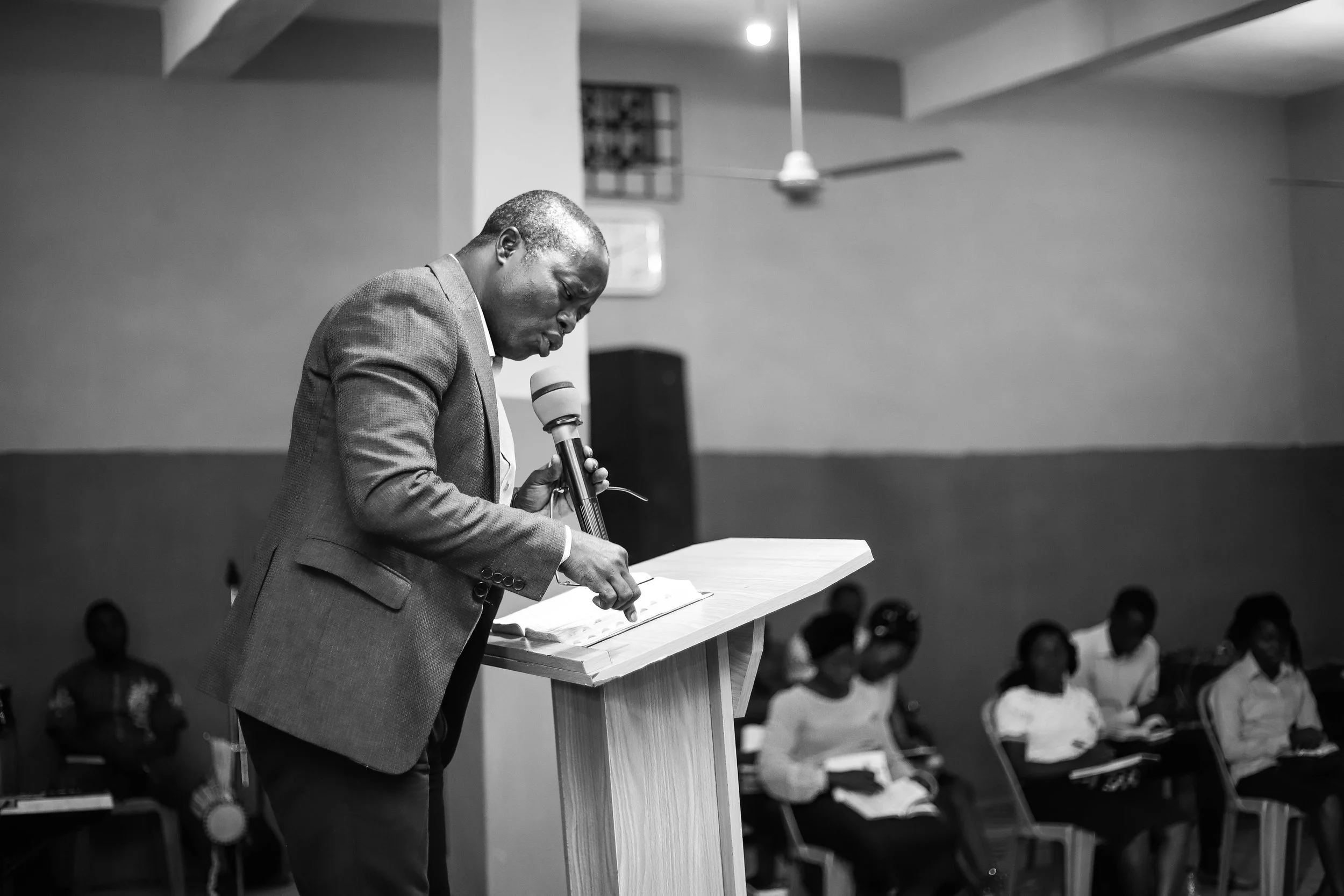
The following is an excerpt from an interview with Dennae Pierre on City to City’s How to Reach the West Again podcast. In the discussion, Pierre points to churches on the margins as a helpful guide in navigating persecution and suffering with hope in God’s ever-present help.
BRANDON J. O’BRIEN: Today we're talking about creating and fostering the kind of communities that faithfully form people into the image of Christ. From what I know about the Surge Network in Phoenix, you have a similar goal of creating a network of relationships that do just that. Can you tell us about the Surge Network’s efforts to achieve that goal?
DENNAE PIERRE: We are a network of churches that started 10-12 years ago amongst church planters who wanted to think more about how to develop future church planters, leaders, and elders. Early on in that process, they realized the need not only for new churches but also for every member of the church to be equipped to follow Jesus in all areas of life. There are a lot of challenges and barriers to that in how we tend to think about our faith, how we think about the world, and how we engage in it.
To address this initially, we developed a discipleship training school. Surge School is a nine-month program that helps take people through the biblical story by challenging some of their Western understanding, showing them the impacts of secularism on our faith, and guiding them in how to demonstrate God's character in our day-to-day lives, in our neighborhoods, our community, and our workplaces. From that, we've developed a seminary program for pastors, a master's degree program, and various pastor networks. Pastors from different regions in our city gather to collaborate, learn, and receive training from international pastors looking to transfer faith to the next generation.
They want to be together; they want to participate in the work that God's called them to while in relationship with other pastors.
There's a lot of really great collaboration primarily focused on relationship. They want to be together; they want to participate in the work that God's called them to while in relationship with other pastors. But it all centers around the theme of what it looks like to serve gospel-centered and outward-focused congregations so that they're able to represent Christ in all parts of our city.
BJO: What does the Surge Network offer pastors that they may not experience in their denominations? Are there church structures and habits that can actually work against equipping congregations for mission in the city?
DP: We have just about every denomination represented in the Surge network at this point, as well as lots of non-denominational folks. One thing they might experience solely through Surge would be the emphasis on the city—we dig into how to minister in our specific context, in this particular time and place. While national events are happening, there's very much a local story and a local expression in how we respond, how we lead, and how we serve, and this element has been important to our network. That theology drew a lot of us together.
As far as the struggles of this kind of mission, the first thing that comes to mind is money. Salaries, having staff, having payroll—those are all good things. And I don't think bi-vocational ministry is for everybody, but when we are used to money providing a certain safety net or security, even as individuals, it can be challenging to lead people into spaces that might be costly. It might impact our families; it might impact our jobs. And while we need leaders with a vision, it can very much become something that one leader pursues for themselves at the cost of discerning what God is calling the whole community towards.
On that same note of vision, one of the barriers we've experienced, especially for more well-resourced churches, is incredible idealism. They have access to large giving funds, beautiful properties, a steady pipeline of young leaders, and there's this idea that “We're going to organize in a way that's going to bring about God's kingdom on earth.” Again, it can serve a purpose, but it is a challenge. It almost creates a blindness to the brokenness in our city that is hard to sit in.
One final challenge we've come up against in bringing people from all different traditions is self-righteousness, division, and argument. These behaviors creep into the church, and accurate ideas don't automatically lead to an embodiment of Christ. We need to train people to preach and teach with words, yes, but how are we helping them learn to create a culture that helps people, not just by inputting words and ideas and thoughts, but actually beginning to acclimate them to the ways of the kingdom?

BJO: Both in Phoenix and more broadly in North America, how have you seen church leadership culture influenced by worldly ways of thinking? How does that work against the leading, equipping, and mobilizing culture we're trying to create?
DP: At least in the traditions I'm part of, I think sometimes the problem is that there's not the humility to say, “Of course there are things in my own tradition and my own understanding of scripture that I'm missing.” Part of the Christian life and living in God's grace is a constant revelation of the gaps between his reality, his truth, his kingdom, and how we see the world. This causes us to turn to leadership practices that are actually unbiblical. You can look at how Paul instructs the church in Ephesus or what is written in the book of James—the behaviors that God calls his people toward—and you realize we've been ignoring whole chunks of scripture around leadership for quite a while.
I think we have a hard time integrating ideas and thoughts about God into truths about how he's called us to love one another and behave towards each other. We don't know how to fit that into our understanding of God's grace and mercy in our life.
That also gets into how we're approaching culture right now. We often take a posture either of absorbing it fully or resisting it fully. A lens of repentance allows us to see what good there is while also challenging the distortions impacting our own worldview or our own heart’s desires. We don't have the ability to live in that nuance right now, in part because we don't have the ability to walk in continual repentance.
A lens of repentance allows us to see what good there is while also challenging the distortions impacting our own worldview or our own heart’s desires.
And what's kind of sad is that places like Harvard Business Review talk way more about this than pop Christian leadership culture. It's interesting that even the business world recognizes and publicly states that leaders who lead through a posture of humility, who create cultures of inclusion, and who are intentional in weeding out narcissism make for better leaders. Of course, there is also all kinds of practical advice about how to grow a business or be a charismatic leader, but that has been infused into Christian culture and, in turn, American culture. There is quite a bit of interplay there.
BJO: How do you advise pastors to stay grounded in their local ministry context without getting caught up in the machinery of social media, conferences, publishing, and all the other interconnected parts of Christian culture? What kind of pull does that have on people, and how do you address it?
DP: It goes back to the repentance piece. Our human tendency is to rationalize why we did what we did, but repentance goes beyond just naming it. It requires us to ask, "How is our money being spent? What does our budget look like? Who are the leaders we're investing in for the next generation, and how are we investing in them?" It gets into structure and money. And I don't see that being the way those with the largest platform, the loudest voice, the most power in our major organizations are leading.
All you can do is grow in self-awareness and allow that to infuse your prayer, your authentic relationships, your community, and then figure out what God is calling you to and what we need to be as far away from as possible.

To help a local church pastor, the best thing to do is know we’re swimming in these waters. You can't get away from it. We have to disciple our congregations through the tensions and poverty and violence and challenges they face. We should be crying out to the Lord in prayer about things that really matter—we can't just detach fully. And you also can’t be pulled into constant anxiety. All you can do is grow in self-awareness and allow that to infuse your prayer, your authentic relationships, your community, and then figure out what God is calling you to and what we need to be as far away from as possible.
Generation after generation, we keep returning to worship false gods. A lot of pastors are hard workers driven by either a sense of achievement or people-pleasing. Unhealthy leadership culture tells you, "You have a lot more power than the kingdom of God says you do," and it’s difficult to resist bending to please people or wanting to do great things, no matter the cost to your family or your staff or your community. We need to name those sins and root them out.
BJO: What insights have you drawn from church traditions outside the power-privilege structure typical in American evangelicalism? How do they shape the way you hope to create a better, different kind of leadership culture?
DP: I would say one thing that seems American, no matter whether you're in places of power or on the margins, is that we love putting a leader on the platform. We love orators; we love charisma; we love vision. That's cross-cultural.
As I’ve spent the last four or five years working on my dissertation, looking at some of the prayer practices of African-American denominations, churches, and church leaders, I’ve seen how ordinary congregations really were the driving force behind a lot of the Civil Rights movement. It's amazing to look at instances like the Montgomery Bus Boycott and see how much organizing and preparation the church moms did in order to finally pull Martin Luther King Jr. and a couple of other leaders to the forefront. When you look at the significant impact of the Christian church in American history, it's the 95% of Christians doing the slow work. Then, of course, there is a voice or two that becomes a conveyer, but that usually comes at the end of a lot of work from a lot of ordinary people. It's going to be the same thing with Latin America—people will never know the names of the hundreds of people who were faithfully walking with Jesus.
I think one of the tragedies in Christian leadership in America is that we focus on achieving great things for God when it's the most ordinary, simple, mundane Christian practices of neighborly love, sacrifice, caring for the poor, bearing another’s burdens, stewarding your benevolence fund well, and answering the door when the homeless person knocks that are great in the kingdom of God. Yet they're not reflected in our Christian leadership formation. What’s reflected is high-level leadership; what we measure people by is their capacity for building institutions and leading organizations. Those are needed gifts, but the heart of what is actually needed is good local church pastors who like pastoring, discipleship, and evangelizing—and who appreciate the mundane, everyday parts of Christian ministry.
It's the most ordinary, simple, mundane Christian practices of neighborly love, sacrifice, caring for the poor, bearing one another’s burdens, stewarding your benevolence fund well, and answering the door when the homeless person knocks that are great in the kingdom of God.
BJO: What practices have you found useful in creating a greater commitment to that kind of “mundane ministry” in a local setting and developing those character traits in leadership?
DP: A lot of different networks and church organizations do this, but we've adopted what we call the BLESS practices. It's an acronym. The “B” challenges you to bless someone from a different culture, bless a Christian, and bless someone who doesn't know Christ every week. It calls you to listen to God and listen (“L”) to another person.
How do you learn to be a better listener to God and people? That’s where “E” comes in for “eat.” Eat a meal with someone not like you, with someone who doesn't know Jesus, and with another Christian. It's a lot of meals. We're busy people, but we're challenging them to do that.
“S” is for “speak”—speak about Jesus to others. Then the last “S” is for Sabbath rest. What does that look like? Think about how we can rest in terms of our Christian community.
We've had thousands of people now commit a whole year to go through the process, and we have great stories of people who are now elders at local churches who were part of somebody's BLESS practice seven years ago—that's how they came to know Christ. These are just simple things we're trying to get people in the habit of doing every week.

We've also been talking a lot over the last five years about practices of reconciliation. Especially here in Arizona, there are some real challenges to how nationalism and different worldviews have seeped into the Christian church. The way people are consuming social media and cable news is really impacting our culture. We're going to have to teach, but we're also going to have to begin identifying practices that are conducive to reconciliation. We have to teach how to talk about things—our tone, our posture, and how we train each other to actually communicate with one another, how you teach someone to listen to a perspective different than theirs without it disrupting them emotionally and causing tons of anxiety. How do you help them identify what's going on inside of them so that they can calmly listen and lean in?
More recently because of my dissertation, I’ve begun to do a lot of work on how to form restorative leaders and create teams that know how to be a restorative presence in broken systems. That's not where most pastors or leaders are—they're coming in having been part of some pretty longstanding systems. How do you help people have the endurance to stay in messy systems and know how to lead, over time, into cultural change and a place of health that reflects the kingdom?
That's where different practices around enemy love, living in solidarity with the margins, confession, and anchoring prayer sustain us with joy in hard places for 10, 20, or 40 years. A commitment to enemy love and the practice of peacemaking has led to deep, rich prayer practices that held people together through significant suffering. How do we learn these practices and teach them to others?
A commitment to enemy love and the practice of peacemaking has led to deep, rich prayer practices that held people together through significant suffering.
I think those are things we desperately need right now. We're really good at calling out brokenness and sin, and I think this is, again, because there's been so much privilege. Even those who are awakening to privilege or to the power they've had for a long time have privilege in being able to sit at a computer and be cynical and angry at everything they’ve inherited.
It's much different than, in the midst of all this pain and suffering, forming a small community in my living room of people trying their best to follow Jesus together. That's something you see again and again in the church on the margins. There's not cynicism. You just hear this deep groaning and suffering together, but there is also a hopeful orientation of what God is about and what he's doing and how he's going to ultimately bring about his righteous reign on this earth.
BJO: We often talk about reaching the West again and the hostility against Christianity as if it's a brand new situation for Christians. What you're bringing up is that African-American Christians, Latin-American Christians, and other immigrant Christians in the Western world have already lived in conditions where the broader culture is hostile to them.
What does the experience of Christian faith at the margins have to offer in terms of a new perspective or encouragement for those of us worried about living in a world where our identity as Christians is met with hostility?
DP: I'll answer in two different ways. One would be that I’ve watched my peers turn away from the faith altogether because of disorientation. There's been so much pain they've experienced in the church and from Christians and Christian leaders that they don't know who to trust. There's a lot to talk about and grieve around that. But one of the things that I keep coming back to is this unshakeable awareness of God's presence with us.
I grew up in a home with a lot of violence and pain, and my life has been full of various challenges in leadership in Christian spaces as a Latina woman from a broken home, but Christ was present and so near and such a comforter through it all. God is faithful and near to the suffering, the brokenhearted, the motherless, the fatherless. And it's built this resiliency of faith that I'm so thankful for. So my first response to this fear of suffering is sadness—it's like wandering in the desert for days without water and being afraid of finding a well. It’s not that we wish suffering on anyone—of course not—but there's this gift of God’s presence to be found.
God is faithful and near to the suffering, the brokenhearted, the motherless, the fatherless.
I hear that when I talk to my brothers and sisters in China who are experiencing tremendous political and religious persecution. And here in Arizona, we're constantly interacting with and ministering to asylum seekers who are fleeing violence in Central America. You hear the joy and the comfort of God finding them and carrying them through.
I don't want to romanticize suffering. I don't want to wish that on people, but there's a kind of sadness I have sometimes for the fear we have of suffering and how much we want control and influence and power. These things are such distractions from the kingdom.
I look at the logic of judgment and the absurdity of our sin and what it leads to, and I think big chunks of the church in America have been part of marginalizing people for a long time. And isn't it ironic that now we are living in fear of being marginalized? And that's not to say that it's okay. But we're not of this world, and this experience can only lead to a stronger, deeper faith in Christ if we decide to follow the Spirit into seasons of challenge.
We're not of this world, and this experience can only lead to a stronger, deeper faith in Christ if we decide to follow the Spirit into seasons of challenge.

There's a lot to learn from those who've suffered. When we talk about revival or the Spirit awakening his church, there's going to have to be a release of fear so that we're able to really love our neighbors, no matter the cost. We've seen two thousand years of the church doing that. It's happened all over the place. In this last century, people have died in prison, loving their neighbors and following Jesus. That's the power of the gospel and that’s what a relationship with Christ is—there is no space that's too dark, too empty, too painful that his love and comfort and peace and presence aren’t stronger.
One of the hard things is that, if there's suspicion towards the theology of another group, we're not able to really learn from their practices. I think that is one of evangelicalism’s besetting sins. We have so much to learn from other disciplines and spheres of learning, but suspicion gets attached to people with different traditions or history or ideas, so we miss out.
We will need to develop those muscles and those skills if we're going to learn from people who've lived lives we can't even wrap our minds around.
BJO: Is there any final insight you want to leave us with?
DP: You know, one of the things I pray for our pastors and leaders all the time is that we would be more concerned with the character of God's people and their ability to live wisely before a watching world than we would be about the behaviors and antics of the world around us. We need to be aware of them, and we need to know that we're living in a reciprocal relationship with culture, but our emphasis should be on discovering how we as a community re-enact the gospel story and build little examples of the kingdom of God, anywhere from how we interact with our church secretary to the culture of small groups being replicated throughout our church.
My hope is that becoming our prevailing desire—that the church would learn how to smell, feel, look, and be more like the kingdom of God. I'm convinced that until we are pursuing that end, I don't think we're going to see the conversion that we pray and hope and long for. We will always be imperfect, we will always fall short, but we need to navigate those experiences and relationships in the grace and love of Christ.

About the Author
In 2005, Dennae Pierre and her husband, Vermon, planted Roosevelt Community Church in Phoenix, Arizona. Today, she is Executive Director of the Surge Network and one of the co-directors for City to City North America.